A small entryway without a closet: 5 useful zones
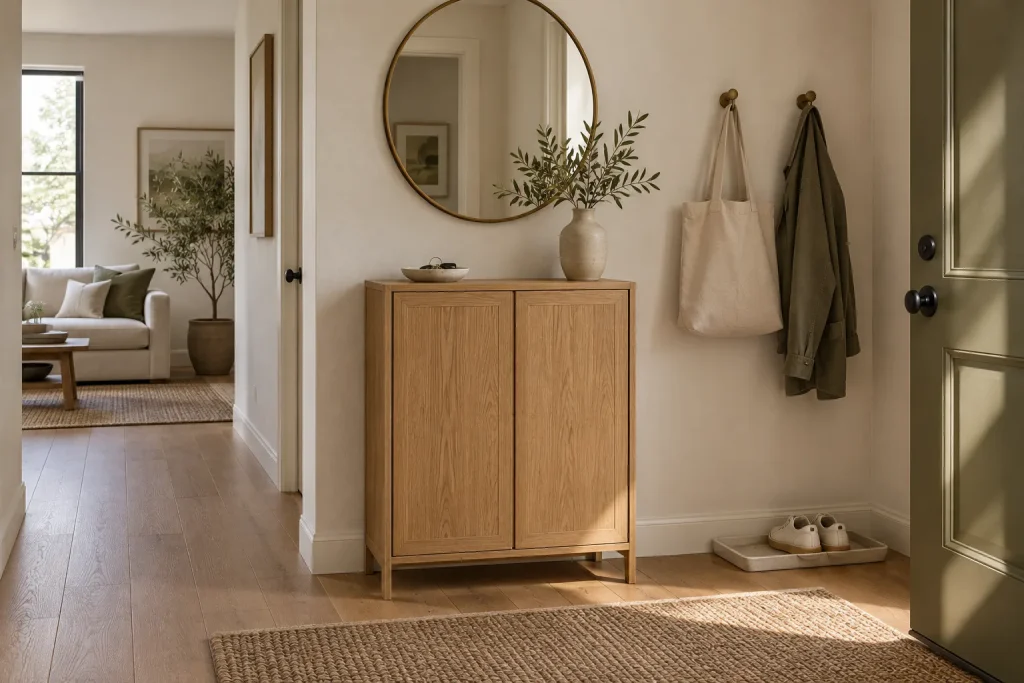
Without a coat closet, an entryway can become the storage space for everything that comes through the door. A more useful approach is to keep only what you need for leaving and arriving, then give each group a clear home.
1. A landing spot for small essentials
Use a shallow dish for keys or a small divided box for items you carry daily. Put it within comfortable reach, away from the door swing. If mail gathers here, choose a limited container and clear it regularly instead of adding a larger pile.
2. A place for the shoes in rotation
Count the pairs currently being worn, not every pair in the household. Keep occasional footwear elsewhere. A tray can contain wet shoes; enclosed storage may suit dry pairs you want out of sight. Check interior dimensions against larger shoes and boots.
3. A home for bags and coats
Hooks can work when the wall and fixings are suitable. Follow the hardware’s load and installation instructions, and check your rental agreement before drilling. A hanging bag projects farther into a walkway than an empty hook, so measure the occupied space.
If wall fixing is not possible, compare a freestanding option carefully. Its base must fit the route and the loaded stand must remain stable according to the manufacturer’s guidance.
4. Somewhere to sit, if you need it
A seat is useful for putting on shoes, but it should not block the entrance. Use furniture designed for sitting; a storage cabinet is not automatically a bench. If space is too tight, a nearby chair in the next room may be a better everyday solution.
5. A reset point for items going out
A small basket can hold returns or things to take on your next trip. Give it a regular clearing routine. Avoid turning this zone into permanent overflow storage.
For enclosed footwear storage, read our slim shoe cabinet checklist. To organize the rest of the home, compare open and closed storage.