How to measure for a storage cabinet before buying
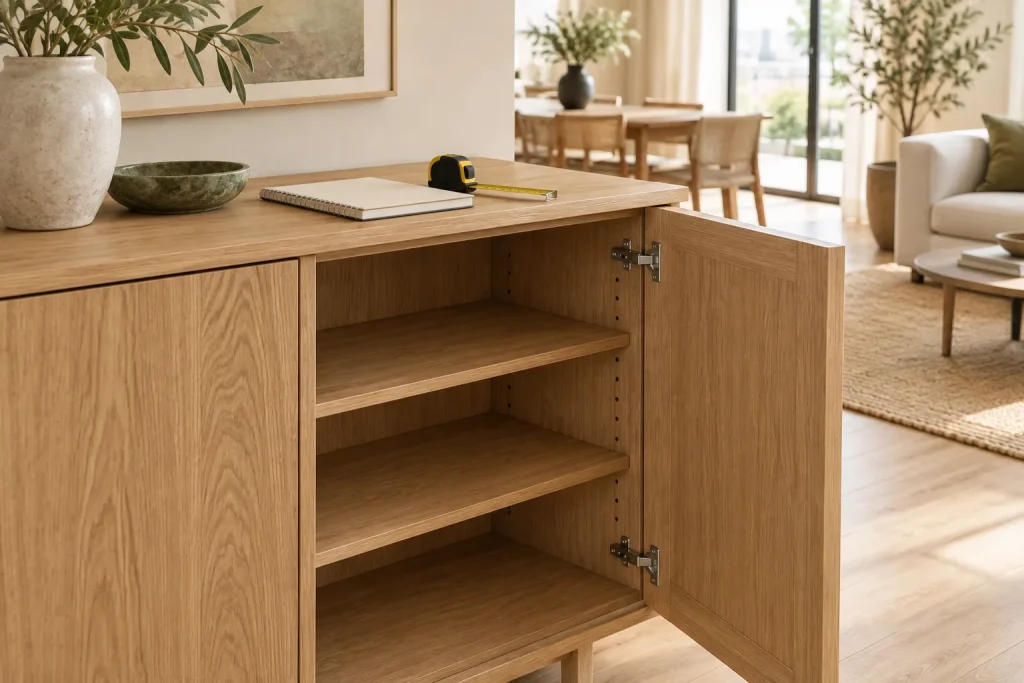
A cabinet can fit its wall and still fail the practical test. Its doors may hit another piece of furniture, its shelves may be too shallow or it may not fit through the stairwell. Check three things before ordering: the room, the contents and the route into your home.
Measure the available space
Record the maximum width, height and depth. Include baseboards, window trim, switches and outlets. Check whether the cabinet needs a gap behind it for fixings or plugs. A product’s depth may exclude handles, so inspect the dimension drawing carefully.
Mark the footprint with painter’s tape. Walk past it and try adjacent doors. A cabinet placed close to a corner may need extra clearance for hinges or handles; do not assume the door opens entirely within the cabinet width.
Measure the contents
Choose the largest object you expect to store and measure it in the orientation it will occupy. Add room to grip and remove it. For a stack of plates, for example, the usable shelf depth and the clear door opening both matter.
Check internal shelf dimensions, adjustment positions and load ratings. External measurements do not account for panels, hinges or drawer runners. If a key measurement is missing, ask the retailer instead of guessing from photographs.
Check the delivery and assembly route
Measure doorways, hallways, stairs and elevator openings where relevant. Ask whether the item arrives assembled or in packages and obtain the packaged dimensions. Turning a large item around a landing can be the limiting step, even when the front door is wide enough.
For flat-pack furniture, identify a clear assembly area and read whether the instructions call for two people. Confirm how the finished piece will be moved into position without damaging the room.
Plan the installation
Follow any anchoring requirements and confirm the wall fixing is suitable for your wall construction. Do not omit anchoring because the cabinet looks stable when empty. Keep vents and access panels clear.
Then choose the storage format using our open versus closed storage guide, or apply the checklist to a closet-free entryway.